Key Takeaways
- Referred customers convert at higher rates, spend more, and churn less than customers from paid ads — at a fraction of the acquisition cost
- The best referral incentive is one your customers actually want, not the one that's cheapest for you. Always reward both sides
- A referral program nobody knows about is a referral program that doesn't work. Promotion is the job
- Start simple: one reward type, one clear message, then optimize once you have data
Your best customers already talk about your store. They mention it to friends over dinner, drop links in group chats, post unboxing photos on Instagram. This happens whether you have a referral program or not.
The difference? Without a program, that word-of-mouth is invisible. You can't measure it, you can't amplify it, and you definitely can't attribute revenue to it. A referral program changes that — it gives your happiest customers a reason to share, a mechanism to do it, and gives you a way to track which sales came from their recommendations.
This guide covers everything a Shopify merchant needs to launch their first referral program: what they actually are (and aren't), how to structure rewards, the setup process, and the mistakes that quietly kill most programs before they gain traction. Whether you're doing $5,000 or $500,000 a month, the fundamentals are the same.
What a Referral Program Actually Is
A referral program is a structured system where you reward existing customers for sending new buyers your way. Customer buys from you, loves the product, shares a unique link with a friend, friend buys, both get rewarded. That's the whole thing.
Don't confuse this with an affiliate program. Affiliates are typically content creators or influencers who promote products for commission — they may never have bought from you. Referral programs target people who've already purchased and had a genuine experience with your brand. The distinction matters because the trust dynamics are completely different. According to Nielsen's Global Trust in Advertising report, 92% of consumers trust recommendations from people they know above all other forms of advertising. A friend's recommendation isn't the same as a blogger's sponsored post.
Also not the same as a loyalty program. Loyalty rewards repeat purchases from the same customer. Referrals reward bringing in new customers. Some merchants run both — and they should — but they solve different problems.
Why Referral Programs Outperform Most Acquisition Channels
Paid ads are getting more expensive. You know this already. CPMs on Meta have climbed for years, iOS privacy changes gutted targeting precision, and Google Shopping is a bidding war that favors whoever has the deepest pockets. TikTok ads work until they don't.
Referral programs flip the economics. Instead of paying upfront for attention that might convert, you pay only when a sale actually happens. Your cost per acquisition is fixed and predictable — it's whatever reward you're offering.
But the cost advantage is only part of it. Referred customers behave differently:
- Higher conversion rates. Someone clicking a referral link from a trusted friend arrives pre-sold. They convert at rates that make your Meta campaigns look embarrassing.
- Higher lifetime value. Research by Bain & Company has consistently shown that referred customers retain better and spend more over time. Okabashi, a shoe brand, found that referred customers spend 13.2% more than non-referred ones.
- Lower churn. When someone joins because a friend vouched for you, they're more committed from day one.
The compounding effect is what makes this powerful. Every referred customer becomes a potential referrer. It's not linear growth — it's a flywheel, and the longer it runs, the more momentum it builds.
The Three Parts of Every Referral Program
1. The Incentive
Your reward structure determines whether customers actually bother sharing. The most common approaches:
- Percentage discount (e.g., "Give 15%, get 15%") — Works well for stores with varied price points. The reward scales with the purchase.
- Flat dollar amount (e.g., "Give $10, get $10") — Simpler to understand. Better when your products cluster around a similar price.
- Cash rewards — Higher motivation, but higher cost and less likely to drive repeat purchases.
- Free product — Powerful for consumables. If someone loves your coffee, offering a free bag per referral is almost irresistible.
The critical decision: do you reward just the referrer, just the friend, or both?
Both. Always both. A one-sided reward creates friction. The referrer feels awkward pushing something that only benefits themselves, and the friend has less reason to buy. Two-sided rewards make the share feel generous instead of self-serving.
2. The Sharing Mechanism
Your customers need a dead-simple way to share. Unique referral links are standard — they work via email, text, social media, anywhere a URL goes. Some programs also use referral codes, which work well in social media bios and podcast mentions.
The key principle: meet customers where they already communicate. Younger audience? Make sure the flow works on mobile and supports sharing to Instagram DMs. B2B or older demographic? Email sharing might be more natural.
Don't overthink this. A single shareable link handles 90% of use cases.
3. The Tracking System
This is where Shopify merchants have a real advantage. The app ecosystem means you don't need to build tracking infrastructure from scratch. Apps like ReferralCandy handle the entire pipeline: generating unique links, attributing purchases to referrers, issuing rewards automatically, and giving you a dashboard to see what's working.
Without proper tracking, you're back to guessing. And guessing is what you were doing before you had a program.
Setting Up Your First Referral Program on Shopify
Choose Your Reward Structure
Start with something generous enough to motivate sharing but sustainable for your margins. A common starting point: 10–15% off for both the referrer and the friend. If your average order value is $80 and your margins are healthy, giving away $10–12 per side is a bargain compared to what you'd pay for that same customer through Google Ads.
Run the math before you launch. If your blended CAC from paid channels is $35, a referral reward totaling $20 split between both parties is a steal — and the customer quality is better.
Write Your Referral Messaging
You need three pieces of copy:
- The invitation to join. This appears post-purchase. Keep it short: "Love your order? Share [Brand] with friends — you'll both get 15% off."
- The share message. Write it in the customer's voice, not your brand's. "Hey, I just got [product] from [Brand] and it's great — here's 15% off if you want to try it" beats any corporate-sounding alternative.
- The reward notification. When a referral converts, tell the referrer immediately. Instant gratification reinforces the behavior.
Promote It — Because "Build It and They Will Come" Is a Lie
This is where most referral programs die. Merchants install an app, configure the rewards, and then wait. Nothing happens. They conclude referral programs don't work for their business.
Wrong. What doesn't work is a program nobody knows about.
- Post-purchase emails. The single highest-converting touchpoint. Someone who just bought and is excited about their order is the most likely person to refer a friend. Trigger this 2–3 days after delivery.
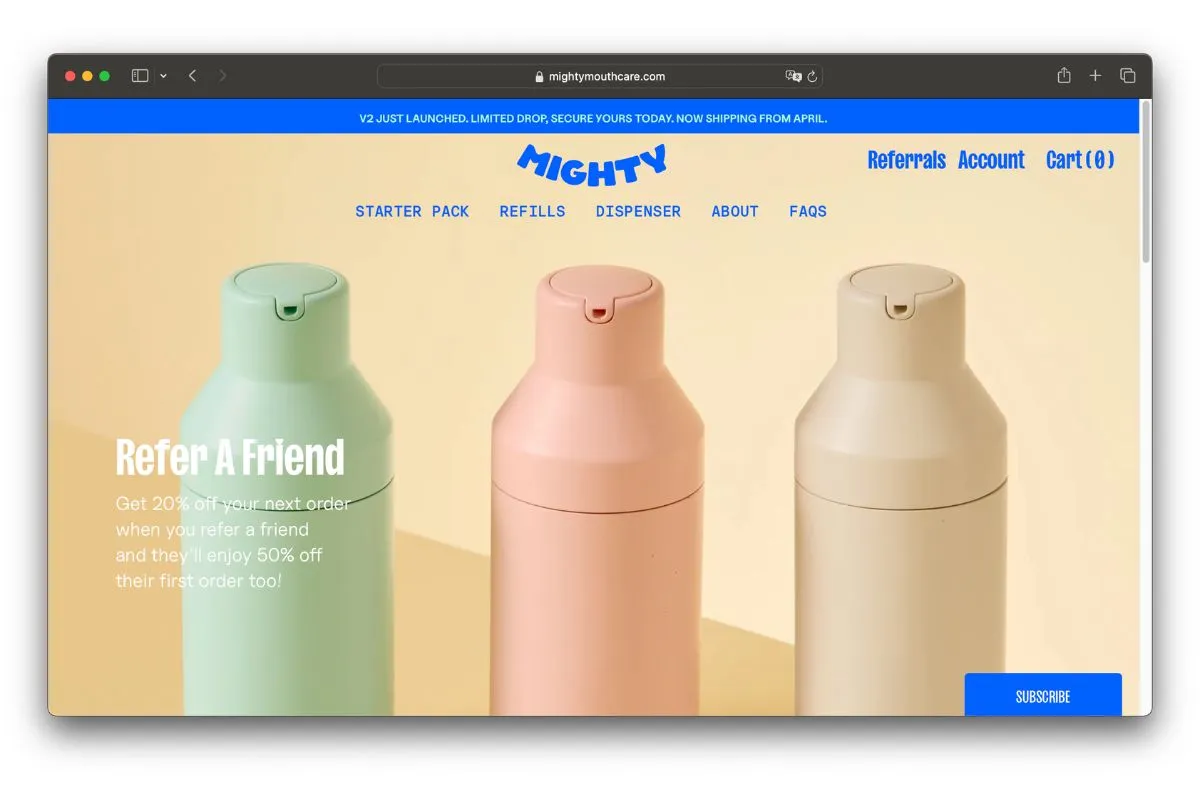
- Website placement. Add it to your navigation, footer, and account page. A dedicated landing page explaining the program helps too.
- Order confirmation and shipping pages. Shopify lets you customize these. Use them.
- Social media. A mention every few weeks keeps it visible without being annoying.
- Package inserts. A card in the box with a QR code linking to the referral page. Physical reminders work surprisingly well.
If you're selling across multiple channels alongside your Shopify store, your referral program gives customers a compelling reason to buy directly from you — where you keep the full margin and own the relationship.
Mistakes That Quietly Kill Referral Programs
Making the reward too small. A 5% discount on a $30 product is $1.50. Nobody is texting their friend to save them a dollar fifty. If the reward doesn't feel meaningful relative to the purchase price, people won't bother.
Burying the program. If customers can only find it by scrolling to the footer and clicking a tiny link, it effectively doesn't exist. Treat it like a feature, not an afterthought.
Overcomplicating the rules. "Refer a friend who spends over $75 on non-sale items within 30 days, and you'll receive a coupon valid for 60 days on orders over $50." Nobody is reading that. Nobody is sharing that. Your rules should fit in one sentence.
Forgetting about it after launch. A referral program isn't set-it-and-forget-it. Check your metrics monthly. Which customers refer the most? What sharing method converts best? Is your reward still competitive? Optimize like you would any other channel.
Not saying thank you. When someone refers a paying customer, they just did your marketing team's job for free. A personal thank-you email — even an automated one — reinforces the behavior and makes them want to do it again.
What Real Shopify Merchants Have Achieved
Theory is nice. Numbers are better.
Farm Hounds, a natural dog treat brand, generated over $600,000 in referral sales with a 35.3x ROI. That's not a typo — thirty-five times return on what they spent running the program.
Toki Kids hit a 12.04% referral rate — five times the industry average — driving $517,960 in referral revenue and a 41x ROI. No complicated strategy. Just a product parents genuinely love and a frictionless way to share it.
Branch Basics, a non-toxic cleaning brand, has earned over $1.5 million from their referral program. When your product replaces something people use every day, referrals become part of the natural conversation.
Mac of All Trades pulled in over $600,000 in referral revenue in under 12 months — a 51x ROI. The pattern is consistent: merchants who actively promote their program and offer rewards worth sharing see real, measurable returns.
Frequently Asked Questions
When should I launch a referral program?
Once you have repeat customers and positive reviews, you have enough goodwill to fuel referrals. You don't need thousands of orders — even a few dozen loyal buyers can kickstart the flywheel. If you've recently moved to Shopify, setting up a referral program early means you start capturing word-of-mouth from day one.
What's a good referral rate to aim for?
The average ecommerce referral rate sits around 2–3%. Anything above 5% is strong. Some brands hit 10%+ with the right product-market fit and active promotion, but don't measure yourself against outliers in your first month.
Should I offer store credit or cash?
Store credit is usually the better choice. It costs you less (product margin vs. actual cash) and drives repeat purchases. Cash rewards can boost participation but won't bring customers back to your store.
How do I prevent referral fraud?
Most referral apps include built-in fraud detection — flagging self-referrals, suspicious email patterns, and duplicate accounts. Requiring a minimum purchase amount and manually approving payouts in the early days catches the rest. Don't let fraud fear stop you from launching.
Can I run a referral program alongside a loyalty program?
Yes, and you probably should. They complement each other — loyalty rewards repeat purchases from existing customers while referrals bring in new ones. Just keep the messaging distinct so customers understand both.
How long before I see results?
Most programs need 4–8 weeks to build momentum. The first few weeks are about getting the program in front of enough customers. Don't judge performance until you've sent post-purchase referral emails to at least a few hundred buyers.
Conclusion
A referral program isn't complicated. Reward your customers for doing something they're already inclined to do — recommend products they love — and give them the tools to do it easily. Pick a reward, set up tracking, promote it relentlessly.
What separates merchants who generate six figures from referrals from those who see nothing? Not the app they use or the reward they choose. It's promotion and persistence. The program itself is table stakes. The work is making sure every happy customer knows it exists.
Start simple. One reward structure, one clear message, one consistent promotion strategy. Add complexity later — tiered rewards, seasonal bonuses, VIP referrer perks — once the foundation is working and you have data to guide decisions.
Your customers are already talking about you. Give them a reason to do it with a link in hand. ReferralCandy integrates directly with Shopify and handles reward fulfillment, tracking, fraud detection, and analytics — so you can focus on building a product worth recommending.