
Quick answer: A referral attribution model captures referral touchpoints across the funnel to credit word-of-mouth for conversions that traditional analytics overlook.
Table of Contents
- Why Referral Attribution Matters
- Understanding the Referral Attribution Model
- Mapping Referral Touchpoints in Multi-Touch Attribution
- How Referral and Affiliate Attribution Differ
- Attribution Tracking Tools and Data Setup
- Launch / Optimise Checklist
- FAQ
- Takeaways
Why Referral Attribution Matters
Attribution models decide which channels get credit for a sale. In a multi-touch environment—where a customer may click an ad, read a review, and later use a friend’s referral link—traditional analytics often undervalue referral marketing.
Yet referrals influence up to 30 % of DTC sales in top-performing programs. Accurately tracking these referral touchpoints is essential to prove ROI and allocate budget fairly across performance channels.
Understanding the Referral Attribution Model
A referral attribution model assigns value to word-of-mouth interactions within your customer journey. It measures the influence of referred visits, clicks, and conversions alongside paid and organic sources.
Key Principles
- Event-based tracking: Each referral link or code creates an identifiable touchpoint.
- Attribution window: Typically 30–90 days; adjust based on buying cycle.
- Conversion logic: Credits are granted when a referred user completes a purchase inside that window.
- Cross-device tracking: Connects referral clicks from mobile to desktop sessions for accuracy.
Using a multi-touch model, referrals can earn partial credit—say 30 %—if the user also interacted with ads or email before purchasing. This provides a fuller picture of performance than last-click attribution.
Mapping Referral Touchpoints in Multi-Touch Attribution
A well-built referral attribution model identifies where referrals appear in the funnel:
1. Awareness Touchpoints
When a customer shares a referral link on social or via messaging, the first visit often starts here. Tracking UTMs in referral URLs helps attribute this early influence.
2. Consideration Touchpoints
Prospects may revisit through ads, email flows, or retargeting before converting. Tools like ReferralCandy’s referral analytics dashboard connect these intermediate clicks to the original referral source, not just the final one.
3. Conversion Touchpoints
The checkout moment—where discount codes or referral IDs trigger—closes the attribution loop. Capturing order-level data in Shopify or WooCommerce ensures the referral partner receives accurate credit.
According to our 2025 data, brands that connect referral events with post-purchase behavior see up to 40 % higher attribution accuracy compared to single-touch setups.
How Referral and Affiliate Attribution Differ
While both reward partners for driving sales, their attribution paths differ:
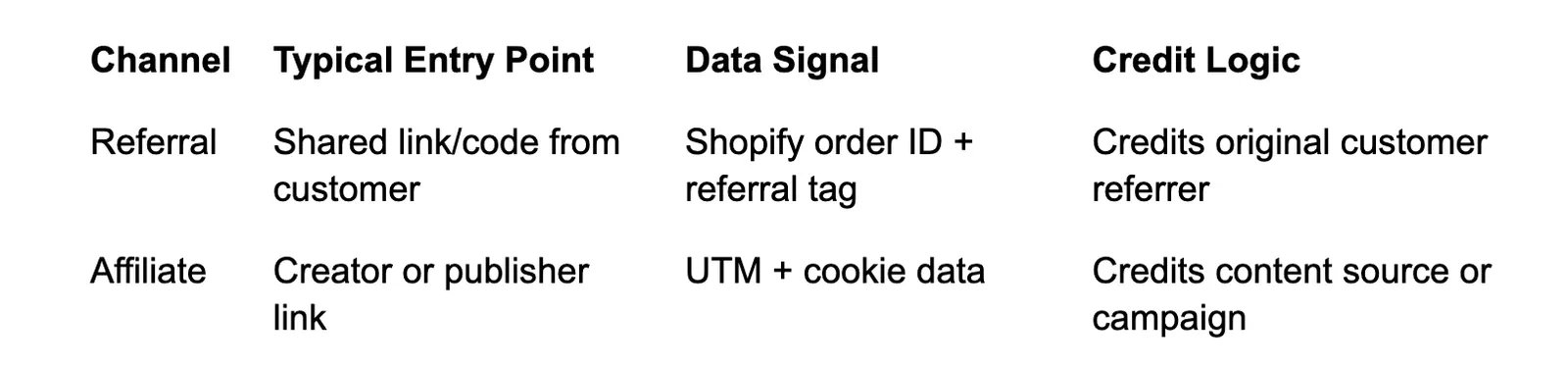
Referral attribution focuses on peer-to-peer influence, while affiliate attribution tracks partner-driven promotion. When combined in one platform—like ReferralCandy with AffiliatePlus—you can evaluate both word-of-mouth and creator-driven conversions within a single dashboard.
Attribution Tracking Tools and Data Setup
1. ReferralCandy
ReferralCandy supports multi-touch referral tracking by tagging every referred order with unique referral IDs, discount codes, and UTM parameters. The dashboard shows first- and last-touch views, share-to-click ratios, and cross-device sales.
2. Analytics Stack Integration
- Connect ReferralCandy with Google Looker Studio for share → click → conversion visualisation.
- Sync data with Klaviyo to trigger follow-ups or reward reminders.
Export referral order data to your attribution dashboard alongside paid and organic sources for unified reporting.
3. Referral Touchpoint Validation
Add referral widgets to multiple surfaces—order confirmation pages, popups, or loyalty dashboards—to capture first interactions. Each widget adds an identifiable event for attribution tracking.
4. Performance Forecasting
Once attribution data stabilises, you can project referral-driven revenue within your broader performance forecasting model to compare against paid and affiliate ROI.
Launch / Optimise Checklist
- Define your referral attribution window (start with 30 days).
- Tag referral links and discount codes with unique UTMs.
- Integrate ReferralCandy data into your analytics dashboard.
- Test cross-device and multi-session tracking accuracy.
- Compare referral vs affiliate contribution monthly.
- Use ReferralCandy’s post-purchase auto-signup to convert new customers into referrers immediately.
FAQ
How does a referral attribution model differ from last-click attribution?
Last-click gives 100 % credit to the final interaction before purchase, often undervaluing referrals that occurred days or weeks earlier. A referral attribution model distributes value across all referral touchpoints, recognising both initial influence and final conversion impact.
What data points should I track for referral touchpoints?
Track link clicks, referral code redemptions, time to purchase, and repeat purchase rate of referred customers. Include campaign UTMs and order IDs in Shopify to connect revenue back to specific referral sources.
Can referral and affiliate programs share the same attribution setup?
Yes. Using a unified tool like ReferralCandy’s AffiliatePlus lets you track both under one roof—separating partner types but keeping all data in a single performance dashboard. This avoids double-counting and improves ROI comparisons across channels.
How do I verify that referral data is accurate?
Cross-check referral conversions against your eCommerce order logs. Look for order tags containing referral IDs, coupon code redemptions, and new-customer flags. If discrepancies appear, test your tracking pixel and attribution window settings.
Takeaways
- Multi-touch attribution exposes the full impact of referral marketing.
- Referrals often appear early in the journey—credit them accordingly.
- ReferralCandy simplifies multi-channel attribution for both referrals and affiliates.
- Benchmark against referral conversion rates of 3–5 % median, 8 % + top quartile.
- Unified dashboards prevent double-counting and strengthen ROI visibility.
Need more? Read our guide on the best Shopify referral apps for tracking and attribution.